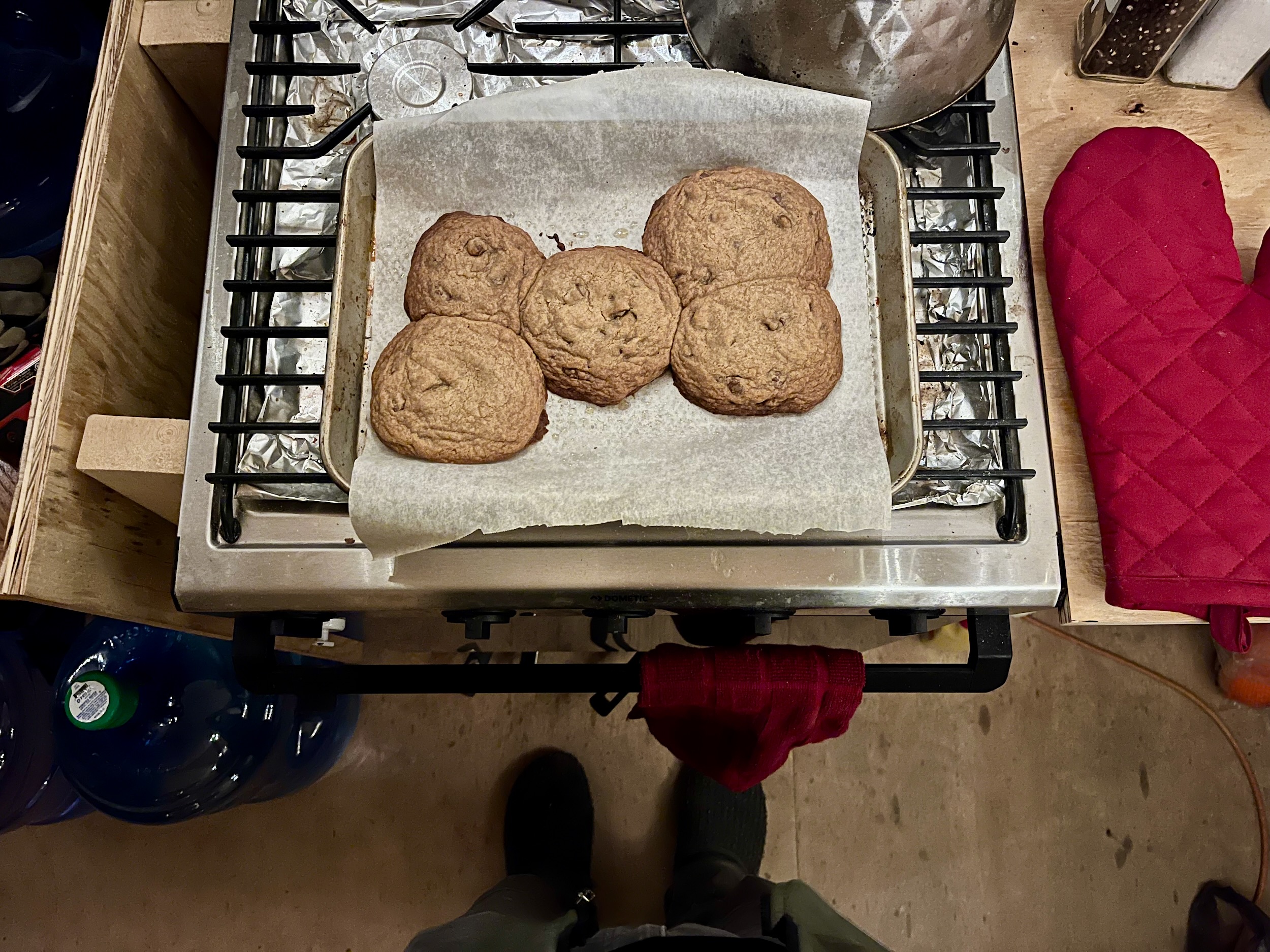
A personal recipe notebook. Recipes are preserved with attribution to their original sources, sometimes with small practical notes or substitutions. This documents taste and habit, not authorship.
Sweat onion in olive oil over medium heat 8–10 minutes until soft and lightly golden. Add garlic for 2 minutes. Push aside, raise heat, add mushrooms in a single layer — leave undisturbed 3 minutes for color. Deglaze with wine, reduce by half. Add broth, fish sauce, bay leaf, thyme. Bring to a gentle simmer. Taste and season.
Add carrots, simmer 5 minutes. Add cabbage, simmer another 5 minutes until tender but not collapsed. Remove bay and thyme. Hold on lowest heat.
Pat fish dry. Season flesh side with salt and pepper, skin side with a pinch of salt. In a separate skillet, heat olive oil over high until just smoking. Place fish skin-side down, press gently for 30 seconds. Cook 2–3 minutes without moving until skin releases cleanly. Do not flip.
Transfer fish skin-side up into simmering broth, keeping skin above the liquid. Cover and cook on low 5–7 minutes until flesh is just opaque and flakes at the thickest point.
Squeeze lemon into broth. Ladle vegetables and broth into a wide bowl. Set fish on top skin-side up. Drizzle with olive oil. Serve immediately with bread.
Notes
Fish sauce plus bone broth runs salty — start with ½ tbsp and taste before adding more. Ask the fishmonger to pin-bone at purchase. The skin sear is worth doing but the lid during the broth finish steams it soft. Accept it or skip the sear entirely and poach straight through. Recipe scales (probably).
source: LLM-generated from averaged Chicago-style home pizza methods
This is a flexible Chicago-style pizza dough built around cornmeal and oil. Pressed thin, it bakes into a crisp, cracker-like crust that’s comfortable being cut into squares. Pressed into a deeper pan, it holds toppings more like a pie crust. Structure comes from the pan and the bake, while oil limits gluten development, keeps the crumb tender, and encourages browning where the dough meets hot metal.
The topping order is deliberate and very Chicago. Cheese goes directly on the dough, followed by toppings, with fire-roasted tomatoes placed on top. The pizza toppings are finished with giardiniera, Italian seasoning, and a sparse layer of sharp white cheddar. Keeping the final cheese light lets the tomatoes remain dominant and gives a reliable doneness cue: when the cheddar melts and turns lightly golden, the pizza is ready.
The tomatoes should be well drained before topping. Any remaining surface moisture cooks off during baking, leaving a moist, concentrated tomato layer on top of a crisp crust. This wet-on-crisp contrast is the point. It’s the same logic that makes tomato-forward Chicago pies work and why the crust still snaps when you pick up a slice.
Giardiniera is the defining ingredient. Packed in oil, it brings heat, acidity, and texture and locks the pizza firmly into Chicago regional flavor. This is the same ingredient that shows up everywhere from beef stands to pizza counters, and it matters that it’s the oil-packed version. Use a true Chicago-style giardiniera, such as Marconi or La Preferida. If you know, you know.
This dough works well in cast iron, deep pans, or standard sheet pans. Oil in the pan lightly fries the bottom and edges during baking, producing a golden crust with a tender interior. The result lands somewhere between tavern-cut thin crust and pan pizza, which is a very Chicago place to land.
Leftovers are excellent. Cold slices at 3am or lunch the next day are often better than the first pass, once the flavors have had time to settle in and cohere. Make more than you think you need.
If you grew up around Chicagoland pizza culture, a lot of this will feel familiar. If you didn’t, there’s an entire genre behind it. One good reference point is Pizza for Everyone, a Chicago-centric pizza book that understands tavern cuts, deep pans, and everything in between.
Ingredients
Dough
2¼ teaspoons active dry yeast (1 packet)
1 teaspoon sugar
¾ cup warm water (105–110°F)
2 cups all-purpose flour
⅓ cup fine yellow cornmeal
1 teaspoon kosher salt
¼ cup neutral oil (corn oil preferred; vegetable or canola work well)
2 tablespoons olive oil
Toppings
(Optional. These are what I used on 260109.)
Pepper jack cheese, grated or sliced
Pepperoni
Green olives, sliced or crushed
Fire-roasted diced or chunked tomatoes, well drained
Chicago-style giardiniera packed in oil
Italian seasoning
Sharp white cheddar, used sparingly as the final layer
Mix
Stir yeast and sugar into warm water and let stand 5 to 10 minutes, until foamy.
In a large bowl, combine flour, cornmeal, and salt. Add yeast mixture, neutral oil, and olive oil. Stir until a shaggy dough forms, then knead briefly until smooth. The dough should feel soft and relaxed.
Rise
Cover and let rise at room temperature for 1 to 1½ hours, until slightly puffy.
Pan and Shape
Pour 2 to 3 tablespoons olive oil into a 10–12 inch cast-iron skillet, deep pan, or sheet pan. Place dough in the pan and press outward with fingertips, pushing toward edges and up sides if using a deeper pan. Rest 10 minutes, then finish pressing.
Assemble
Layer ingredients in this order:
Pepper jack cheese
Toppings of choice
Fire-roasted tomatoes (drained)
Giardiniera (use with caution)
Italian seasoning
Sparse sprinkle of sharp white cheddar
Bake
Bake at 425°F (218°C) for 30 to 40 minutes, until the edges are golden and the sharp white cheddar has melted and lightly browned. Cool briefly, cut into squares, and immediately eat the smallest corner.
Topping Notes
This pizza works best with restrained topping combinations.
Vegetarian versions work well using olives, giardiniera, and tomatoes alone. Pepperoni fits naturally here. Italian-style sausage also works well; the classic Chicago fennel-forward flavor can be approximated with certain breakfast sausages or standard sweet or hot Italian sausage links. Remove casings and add in nickel-sized chunks.
Avoid wet vegetables and overly complex combinations. Excess moisture softens the crust and dulls the contrast, which defeats the whole point.
1/2 cup salted cultured butter (such as Vermont Creamery) (4 ounces), plus more for serving
8 ounces crème fraîche, at room temperature
2 teaspoons kosher salt
2 tablespoons chopped fresh chives
Directions
Preheat oven to 450°F. Pierce each potato a couple of times using a fork. Place potatoes directly on oven rack; bake until completely tender, 50 minutes to 1 hour.
During last 5 to 10 minutes of potato cooking time, heat cream and butter in a small saucepan on medium-low; cook until butter melts and mixture is very warm, about 5 minutes. Set aside, and keep hot.
Working with 1 potato at a time while potatoes are still very hot, cut potato in half lengthwise. Hold potato halves using a towel or pot holder, and use a spoon to scoop out flesh into bowl of a stand mixer fitted with the paddle attachment. Repeat process with remaining potatoes. Mash potato flesh using a fork or potato masher until broken into small pieces. Beat on medium-low speed, and gradually increase mixer speed to medium, beating until smooth, about 1 minute.
Remove bowl from stand mixer. Using a silicone spatula, gradually stir in hot cream mixture; stir in crème fraîche and salt until well combined. Sprinkle with chives, and top with pats of butter just before serving.
About this recipe
Ann Taylor Pittman bakes potatoes to create a fluffy, smooth mashed potato that’s a guaranteed crowd favorite. Baking the potatoes instead of boiling them reduces the water content and keeps them dryer from the start. This helps prevent them from becoming gummy and overworked when they are mashed.
With this technique, Pittman relies on russet potatoes, which are prized for their fluffier, dry texture. She mashes them with a duo of crème fraîche and cultured butter, which add tangy richness that turns this simple side dish into a holiday standout. Best of all, these potatoes reheat like a dream, and can easily be made ahead of time: The mashed potatoes are still wonderfully creamy even after being refrigerated for a few days and reheated in the microwave.
Here is the recipe for Option 1: Creamy Tomato Soup
Ingredients:
2 tbsp olive oil
1 onion, diced
3 garlic cloves, minced
2 (28oz) cans crushed tomatoes
2 cups chicken or vegetable broth
1 tsp dried basil
1 tbsp sugar
Salt and pepper to taste
1/2 cup heavy cream
Instructions:
In a large pot, heat the olive oil over medium heat. Add the diced onion and cook for 5 minutes until translucent. Add the minced garlic and cook for 1 minute until fragrant.
Pour in the crushed tomatoes, broth, dried basil, sugar, and season with salt and pepper to taste. Bring to a simmer.
Reduce heat to low and let the soup simmer for 15-20 minutes to allow the flavors to meld.
Remove the pot from heat and use an immersion blender to puree the soup until smooth and creamy. Alternatively, you can puree in batches in a blender.
Once blended, return the soup to low heat. Stir in the heavy cream and heat through for 2-3 minutes, being careful not to boil.
Taste and adjust seasoning as needed, adding more salt, pepper, or sugar to taste.
Serve the creamy tomato soup warm, garnished with fresh basil, croutons, parmesan cheese or a grilled cheese sandwich on the side.[1][2][3][6]
This creamy tomato soup has a rich, velvety texture from the cream and a bright, sweet tomato flavor. The onions, garlic and dried basil add lovely aromatic notes. It’s the perfect comforting soup, especially paired with grilled cheese.
Here is a recipe for a basic sourdough bread loaf that will fit in an 8-inch pullman loaf pan, using 1 cup (227g) of fed sourdough starter:
Ingredients:
1 cup (227g) fed and active sourdough starter
1 cup (237ml) warm water
1 tsp (6g) salt
3 cups (384g) bread flour
1 tbsp (14g) unsalted butter, softened (optional)
Instructions:
In a large bowl, combine the sourdough starter and warm water. Stir with a wooden spoon until well mixed.
Add the salt and 2 cups (256g) of the bread flour. Mix until a shaggy dough forms.
Turn out onto a lightly floured surface and knead for 5-7 minutes, working in the remaining 1 cup (128g) of bread flour as needed until the dough becomes smooth and elastic. If using butter, knead it in at the end.
Place the dough in a lightly greased bowl, cover with plastic wrap or a damp towel, and let rise at room temperature for 6-8 hours.
Once doubled in size, punch down the dough to release air bubbles. Shape into a tight log and place in a lightly greased 8-inch pullman loaf pan.
Cover and let rise for another 1-2 hours until dough has risen just below the lip of the pan.
Preheat oven to 375°F (190°C).
Bake for 35-40 minutes until deep golden brown. The internal temperature should read 200-205°F (93-96°C) on an instant-read thermometer.
Remove from pan and let cool completely on a wire rack before slicing.[1][2][4]
This makes a nice basic sourdough loaf with a tight, even crumb perfect for sandwiches or toast using the pullman pan. The long fermentation develops great flavor from the sourdough starter.
freshly squeezed lemon juice to taste approximately 1-3 teaspoons, adjust to taste
Instructions
Whisk together the mayo, sour cream and milk until smooth. Add the spices and whisk until combined. Add the lemon and whisk again. Pour into a jar and chill in the refrigerator until ready to serve. This dressing will keep nicely in the refrigerator for up to a week. Enjoy!
Notes
I frequently swap plain white vinegar for the fresh lemon juice in this recipe. Both acids work beautifully to provide the perfect amount of tang in the dressing.
Place beans and cumin in small bowl; partially mash. Season to taste with salt and pepper. Mix 2 teaspoons olive oil and lime juice in medium bowl; add coleslaw, green onions, and cilantro and toss to coat. Season slaw to taste with salt and pepper.
Heat 1 tablespoon olive oil in large nonstick or cast iron skillet over medium-high heat. Add tortillas in single layer. Spoon 1/4 of bean mixture onto half of each tortilla; warm 1 minute. (Whenever I skip minute, the tortillas break instead of bend and I regret it.) Fold tacos in half over filling. Cook until golden brown underneath, about 1 more minute, then flip and crisp on the second side, another 1 to 2 minutes. Spoon feta and slaw into tacos. Pass hot sauce alongside, or if your name is Alex, drown your taco in a puddle of it.
from https://thelazyslowcooker.com/lazy-slow-cooker-yogurt-greek-or-regular/
Equipment
3.5 qt or larger crockpot
slow cooker liner (optional)
measuring cup
strainer a yogurt strainer is great, but a regular strainer will work with cheesecloth as a lining.
large mixing bowl
cheesecloth optional
Ingredients
½ gallon fat free milk
½ cup yogurt with live and active cultures
Instructions
place slow cooker liner into slow cooker, if using
pour milk into slow cooker, cover and cook on high for 2-3 hours (depending on your slow cooker) or until milk temperature reaches 180°F. It takes me just about exactly 2 hours in my 6qt Crockpot brand slow cooker.½ gallon fat free milk
turn off slow cooker and allow milk to cool to between 110° and 120°F
while milk is cooling, allow ½ cup plain yogurt with live active cultures to come to room temperature½ cup yogurt with live and active cultures
when milk is as close to 110°F as possible (but not less), carefully mix room temperature yogurt fully into milk
replace cover and then drape slow cooker with a towel (or two) for up to 8-12 hours. It is important that the yogurt/milk mixture to be in the dark. After about 6 or so hours, you can move your crockpot into the refrigerator if you won’t be able to get to it before the total timing exceeds 12 hours. This will allow you to handle the next step when your schedule permits
after sitting, your yogurt will have a layer of liquid on top of it. If you want regular yogurt, just pour off the top layer and serve!
to make Greek yogurt, place cheesecloth into a yogurt straine or a strainer lined with cheesecloth. Place strainer into a bowl that has room for draining.
add yogurt into cheesecloth/strainer and allow extra liquid to drain. This can be done in the refrigerator or on the counter. The longer you allow it to drain, the thicker and more creamy your yogurt will be (but the less volume of yogurt you will have).
enjoy your homemade yogurt!!!
Notes
Notes: Be sure to set aside ½ cup of your homemade yogurt so that you can use to make another batch.
This recipe calls for fat free milk and yogurt as written. However, it will work with any level of fat you prefer in both your milk and starter yogurt.
1 ½ cup shredded cheddar cheese, preferably sharp or extra sharp
1/2 cup shredded Swiss cheese
INSTRUCTIONS
Cook the broccoli in a glass bowl with a few tablespoons of water covered in saran wrap in the microwave for 3-4 minutes while you prepare the rest of the soup.
In a medium pot, melt butter then add the onions. Cook for a few minutes until soft. Add the flour, salt and pepper. Cook together, stirring constantly, for 2 minutes then slowly whisk in milk and chicken broth. Heat on medium heat until soup starts to thicken, about 5-8 minutes. The soup will still be thin until you add the cheese in the next step.
Reduce heat to very low and add cheeses and stir until completely melted. Stir in cooked broccoli. Add more salt and pepper to taste, if needed. If you need to thin it out you can whisk in some more milk or chicken broth. If it’s too thin, you can simmer it a bit longer to thicken it up.